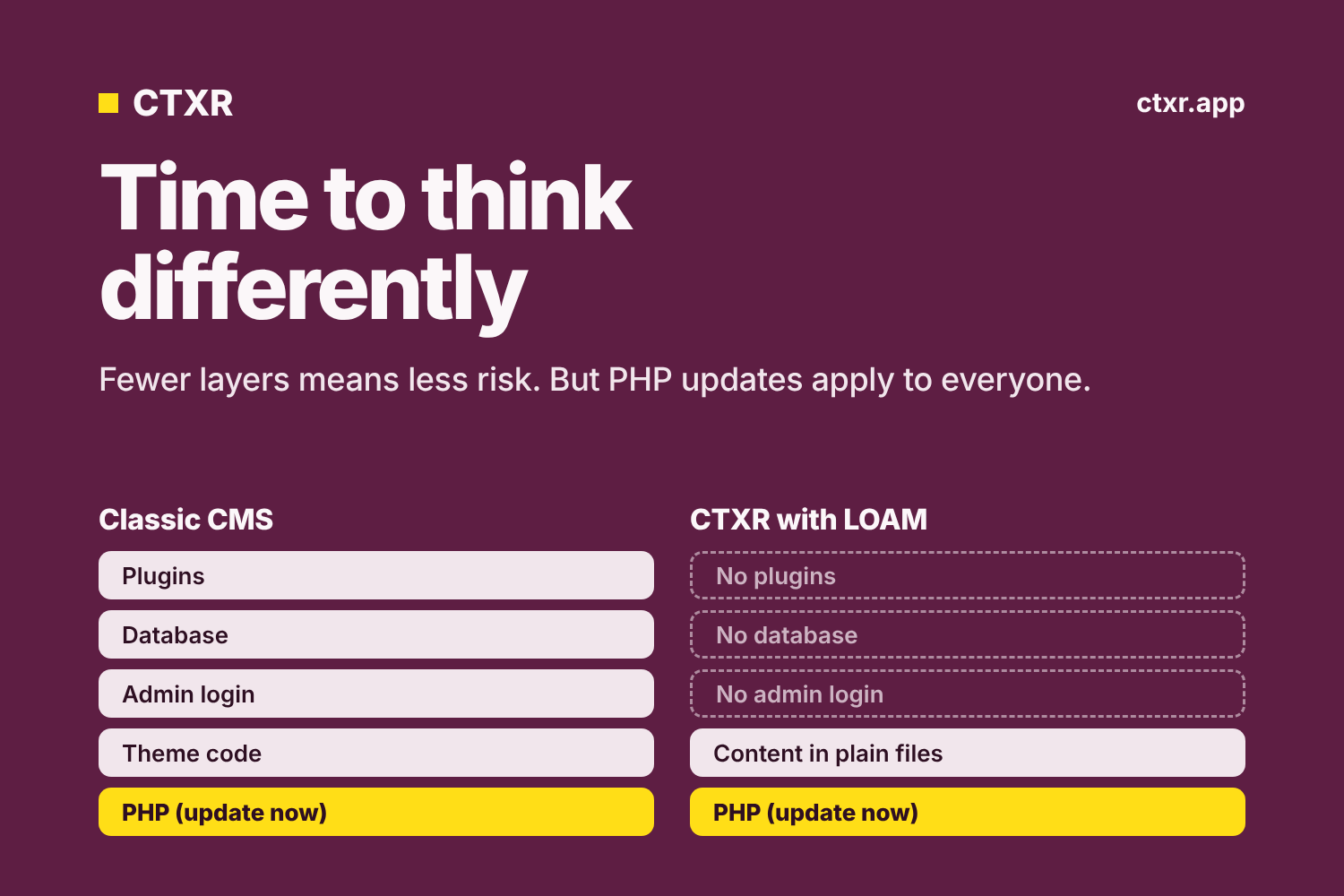
Why LOAM and CTXR work so well together
LOAM is the engine behind CTXR. Here is how it works, in plain language, and why it fits so well with CTXR.
Read articleUpdates from CTXR projects, and perspectives on where location-based technology, structured data and AI agents are heading.
LOAM is the engine behind CTXR. Here is how it works, in plain language, and why it fits so well with CTXR.
Read article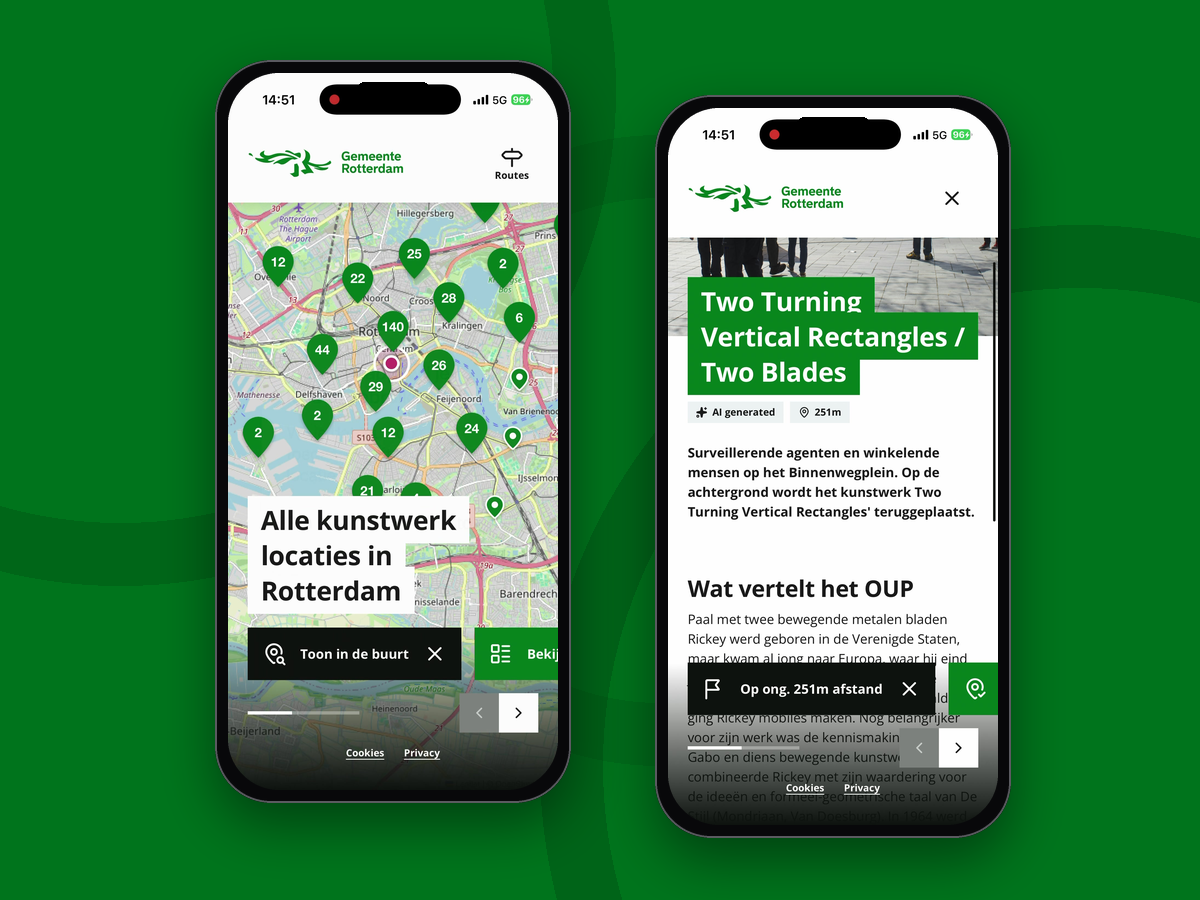
Commissioned by the City of Rotterdam, we built OUP Monumental: a web app that puts public artworks and monuments on an interactive map, with a page for every object and routes of your own. Built on CTXR.
Read articleWhy organisations choose CTXR: open, structured content (Schema.org), privacy by design, a login without passwords, a full CMS and your own AI agent (Claude first, or another assistant that speaks MCP, such as the European platform Mistral), installable as an app, quick results and cost-effective.
Read article
ArtiShock Productions (the team behind CTXR) and social design studio Arttenders have been selected for phase 1 of the Innovation Impact Challenge "IX for social inclusion and cohesion" by RVO and CIIIC. Together they are developing De Blikopener: a hybrid neighbourhood approach that strengthens community self-reliance before and during a crisis.
Read article
First came GUIs, then touch, then voice. Now AI agents are starting to act on our behalf — booking, browsing, managing. Agentic Experience (AX) is the design discipline that decides whether your platform is ready for that.
Read article
People increasingly ask AI assistants directly instead of browsing search results. If your destination's information isn't structured and machine-readable, AI agents either skip it or make something up. Here's what "answer ready" means in practice.
Read article
The CTXR platform officially launched this month. Organisations, cities, developers and makers can now sign up via ctxr.app to build their own interactive city information, routes, visualisations and XR experiences.
Read article